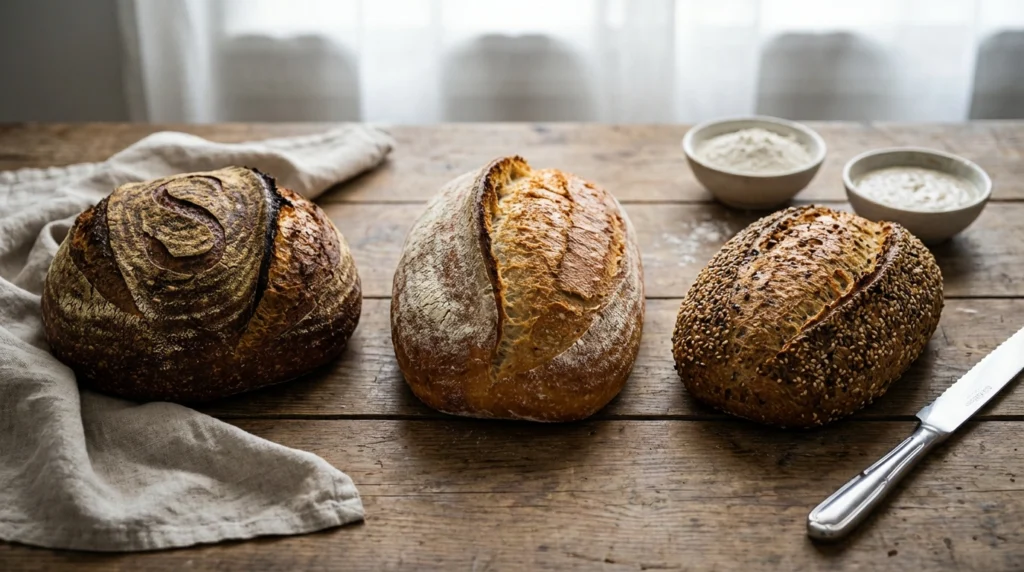
Selecting the right flour for your sourdough starter shapes everything that follows. The flour you choose affects fermentation speed, flavour development, rise strength, and ultimately whether your starter thrives or merely survives. Most bakers focus on their final dough flour, yet the starter flour decision gets far less attention—despite being equally important. At Crumb Culture, we believe simplicity and intentionality go hand in hand, so let’s cut through the noise and find the flour that works best for your needs.
The best sourdough starter flour depends on three factors: protein content, whole grain composition, and your local availability. All-purpose white flour (around 11-13% protein) works reliably and consistently, making it the safest choice for beginners. However, whole grain flours like spelt, rye, or wholemeal create more active starters with faster fermentation and deeper flavour. The key is matching your flour choice to your baking goals and environment rather than chasing what works for someone else.
Understanding Flour Protein and Its Role in Starter Development
Protein content directly influences how quickly your starter ferments and how strong it becomes. Flours are typically classified by protein percentage: bread flour (12-14%), all-purpose (10-12%), and cake flour (7-9%). Higher protein flours develop stronger gluten networks, which means better rise potential and more stable fermentation. However, more protein isn’t always better for starters—especially in the early weeks when you’re establishing the culture.
In practice, a starter made with all-purpose flour takes 5-7 days to become actively bubbly, whilst bread flour often accelerates this to 3-5 days. This happens because the stronger gluten structure traps gas more effectively, making activity visible sooner. Moreover, protein feeds the wild yeast and bacteria, so higher protein flours provide more nutrition to establish a robust culture. That said, rye flour—which has weaker gluten but higher enzyme activity—often shows faster initial bubbling despite lower protein content.
When you’re building a new starter, understand that protein content affects not just speed but also flavour development. The wild yeast (primarily Saccharomyces cerevisiae) and bacteria (mainly Lactobacillus plantarum) break down proteins and starches differently depending on the flour’s composition. Higher protein creates conditions where these microorganisms produce more complex organic acids and flavour compounds over time. Therefore, your choice today influences the character of your starter months from now.
Why Protein Matters More Than You’d Think
Many bakers assume all flours are interchangeable for starters, yet protein content determines your maintenance schedule. A starter made from high-protein bread flour may need feeding every 8-12 hours at room temperature, whilst an all-purpose flour starter often stretches to 12-24 hours. This matters practically: starting with a moderate-protein all-purpose flour prevents you from managing an overly aggressive culture if you’re new to sourdough starter management.
Protein also influences how your starter behaves across seasons. During warmer months, high-protein starters ferment aggressively and may become difficult to manage without frequent feeding. Conversely, a gentler all-purpose flour starter remains more forgiving when ambient temperature fluctuates. You’re less likely to abandon your starter due to frustration if you’ve chosen a flour suited to your environment and schedule.
White vs Whole Grain Flours: What Actually Matters
The choice between refined white flour and whole grains is where sourdough starter decisions become truly personal. White flour (whether all-purpose or bread flour) contains primarily the starchy endosperm, with bran and germ removed during milling. Whole grain flours retain these components, bringing more nutrients, enzymes, and natural microorganisms directly into your starter jar.
Here’s what happens in practice: white flour starters develop steadily and predictably. The refined starch feeds your yeast and bacteria consistently, and you’ll see clear activity within days. There’s a reason commercial bakeries and most sourdough guides recommend this starting point—it works reliably across different kitchens and climates. However, white flour starters often develop more slowly in flavour complexity because they lack the bran and germ components that accelerate fermentation and microbial diversity.
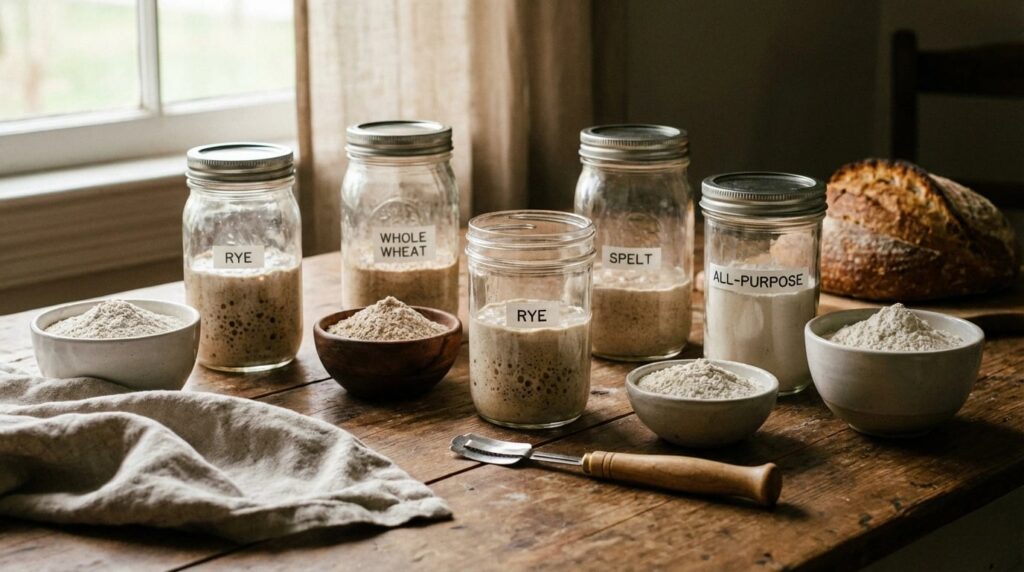
Whole grain flours—particularly rye—create noticeably more active starters from day one. Rye contains pentosans and enzymes that wild microorganisms love, resulting in vigorous bubbling and rapid rise strength by day 3 or 4. Understanding starter microbiology explains why whole grains accelerate fermentation: the bran fragments provide additional surface area for microbial colonisation, and the natural organisms already present on grain husks jumpstart your culture. Wholemeal flour and spelt offer middle ground—more activity than white flour, but less aggressive than pure rye.
The Trade-off Between Activity and Manageability
A rye-based starter becomes powerful quickly, but power brings responsibility. These starters ferment so vigorously that they can overflow your jar if you’re not vigilant, and they demand more frequent feeding during active seasons. Conversely, a pure white flour starter grows more gently, making it forgiving for busy schedules or beginners still finding their rhythm. Starters built on whole grains develop distinctive tangy, complex notes within weeks. White flour starters typically require 6-12 weeks to achieve comparable depth, though they ultimately settle into a clean, mild flavour that pairs beautifully with lighter breads. Your choice here isn’t about which is objectively better—it’s about matching your patience, schedule, and flavour preferences to the flour’s characteristics.
Step-by-Step Guide to Choosing Your Starter Flour
Step 1: Assess Your Primary Goal
Before buying flour, clarify why you’re building a starter. Are you baking regularly, occasionally, or still deciding? Do you want quick results or are you happy investing time for flavour? Is predictability important, or do you enjoy experimenting? If you bake 2-3 times weekly and want simplicity, all-purpose white flour is ideal. If you bake once monthly and can be flexible with timing, whole grain blends work wonderfully. Your answers eliminate unnecessary options immediately.
Step 2: Check Flour Specifications
Visit your flour supplier’s website or check the packet for protein content. Most reputable brands list this percentage clearly. Make a note of the percentage—this single number predicts fermentation speed and strength more reliably than brand name. Additionally, confirm whether the flour has been bleached or unbleached. Unbleached flour contains more natural enzymes and microorganisms, which slightly speeds starter development. Bleached flour works perfectly fine, but unbleached offers marginal advantages.
Step 3: Consider Your Local Climate and Water
Temperature and water chemistry subtly influence which flour performs best for you. In warm climates (above 24°C consistently), choose all-purpose or lower-protein flours to prevent aggressive fermentation. In cool climates, higher-protein or whole grain flours compensate by encouraging activity. Additionally, if your tap water is particularly soft or hard, this affects fermentation speed—whole grain flours are more forgiving of variable water chemistry because their natural enzymes compensate. If you’re unsure about your water, whole grains offer a safety margin.
Step 4: Choose Between Pure White or a Blend
Your actual flour choice now becomes clear. For beginners or predictability-focused bakers, select a single all-purpose white flour (10-12% protein). For those wanting activity faster, choose rye flour or a 50/50 blend of all-purpose and wholemeal. For balanced results, 70% all-purpose with 30% whole grain offers reliability plus accelerated activity. Once you’ve selected, purchase a 1kg or 500g bag—you don’t need much flour to maintain a starter long-term, and fresher flour produces better cultures.
Step 5: Start Your Starter and Track Results
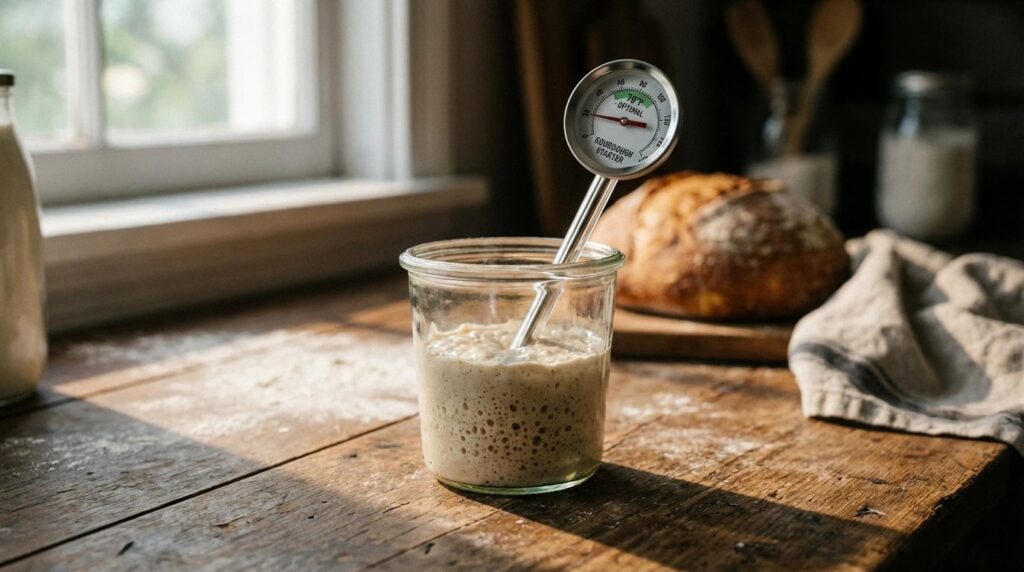
Mix equal parts flour and water (50g each is a manageable starting quantity) with a pinch of salt if desired. Feed daily at the same time, replacing half the mixture with fresh flour and water. For the first week, record observations: when you first see bubbles, how strong the rise is, how the smell develops, and feeding frequency needed. This documentation tells you whether your flour choice was right for your situation. A healthy starter will show clear signs of life within days, though the specific timeline depends on your flour and environment.
Common Mistakes When Selecting Starter Flour
A frequent mistake is buying the cheapest flour available. Economy flours sometimes contain additives or have inconsistent protein content across batches. This creates unpredictable starter behaviour. Similarly, some bakers choose flour based on what they use for their final dough, forgetting that starter and dough flour serve different purposes. Your sourdough dough might call for premium bread flour, whilst your starter thrives on humble all-purpose. These aren’t the same decision.
Another common error is overthinking speciality flours. Spelt flour, einkorn, and ancient grains have their place, but they’re genuinely advanced choices. Spelt ferments faster than wheat and produces a wetter dough, meaning your starter demands different maintenance. Einkorn has uniquely weak gluten, which affects both starter strength and final bread characteristics. These flours work beautifully once you understand their quirks, but they’re not ideal for establishing your first starter.
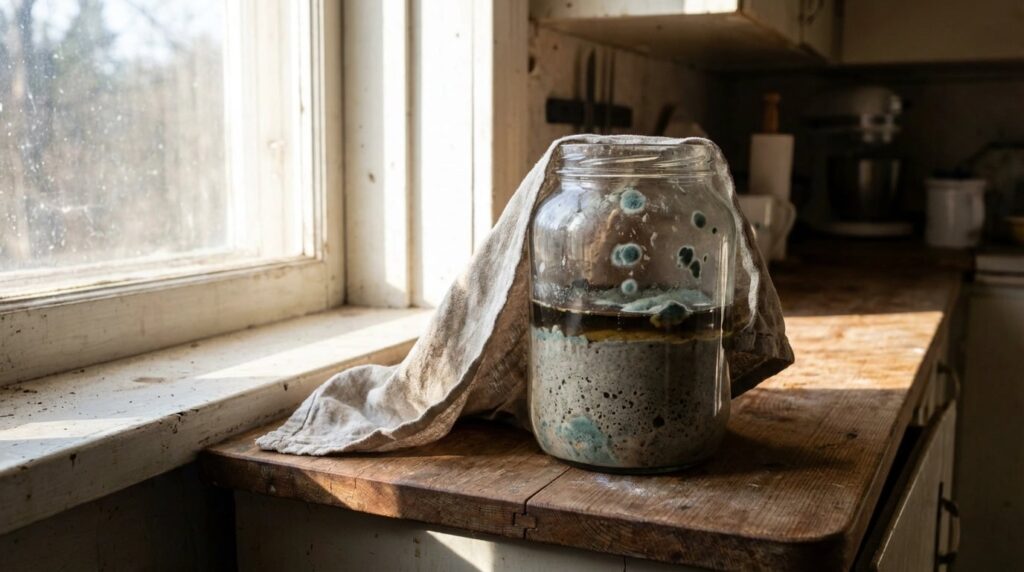
Many bakers also switch flour mid-journey without realising the consequences. Your starter adapts to its flour—the microbial balance shifts to match the available nutrients. When you suddenly switch from rye to white flour, your starter initially struggles. The bacteria and yeast that thrived on rye’s enzyme-rich environment now face starch with fewer enzymes. The culture recovers within a few feedings, yet this instability creates temporary weakness. A struggling starter that isn’t rising properly often relates to environmental factors or flour changes, so choosing one flour and sticking with it prevents unnecessary complications.
Finally, bakers sometimes ignore their region’s flour traditions. For centuries, different cultures built starters on locally grown grains. This isn’t nostalgia—it’s practical wisdom. Sourdough traditions evolved using locally available grains (Wikipedia), and those traditions persist because they work. If you live somewhere where a particular grain grows well, sourcing that flour locally supports regional agriculture and often provides fresher product than imported alternatives.
Maintaining Consistency Once You’ve Chosen
Once you’ve selected your flour and established your starter, consistency becomes your greatest asset. Stick with the same flour brand and type, feeding at consistent times, and using consistent water. This stability lets your starter reach its potential. Your culture develops a rhythm that matches your schedule, and you’ll eventually predict behaviour with remarkable accuracy. The bacteria and yeast establish populations optimised for your specific flour, water, temperature, and feeding pattern.
In practice, this means purchasing your chosen flour regularly rather than experimenting with alternatives on a whim. A 6-month-old starter has developed deep complexity and predictability precisely because it’s fermented consistently in the same conditions. If you need to switch flours, do so gradually: replace 25% of your usual flour with the new variety for three feedings, then 50%, then 75%, finally moving to 100%. This transition allows your microbial population to adapt without shock.
Your flour choice needn’t be permanent. If circumstances change—you relocate, your baking frequency shifts, or you discover preferences you didn’t anticipate—your starter can adapt. Understanding that you chose your flour deliberately, based on clear reasoning, makes any future adjustment feel intentional rather than random. You’re not searching for the perfect flour. You’re choosing the flour that’s perfect for your current life, maintaining it thoughtfully, and remaining open to evolution. This philosophy aligns with everything Crumb Culture stands for: simple sourdough, no stress, no waste.
Start with honest answers about your goals and climate, select from the three main categories (white bread flour for reliability, all-purpose for balance, or whole grain for activity), then commit to that choice for at least three months. This approach removes decision paralysis whilst respecting the flour’s genuine impact on your fermentation. Within weeks, you’ll understand whether your choice was right—and you’ll have a thriving culture that validates the decision you made.